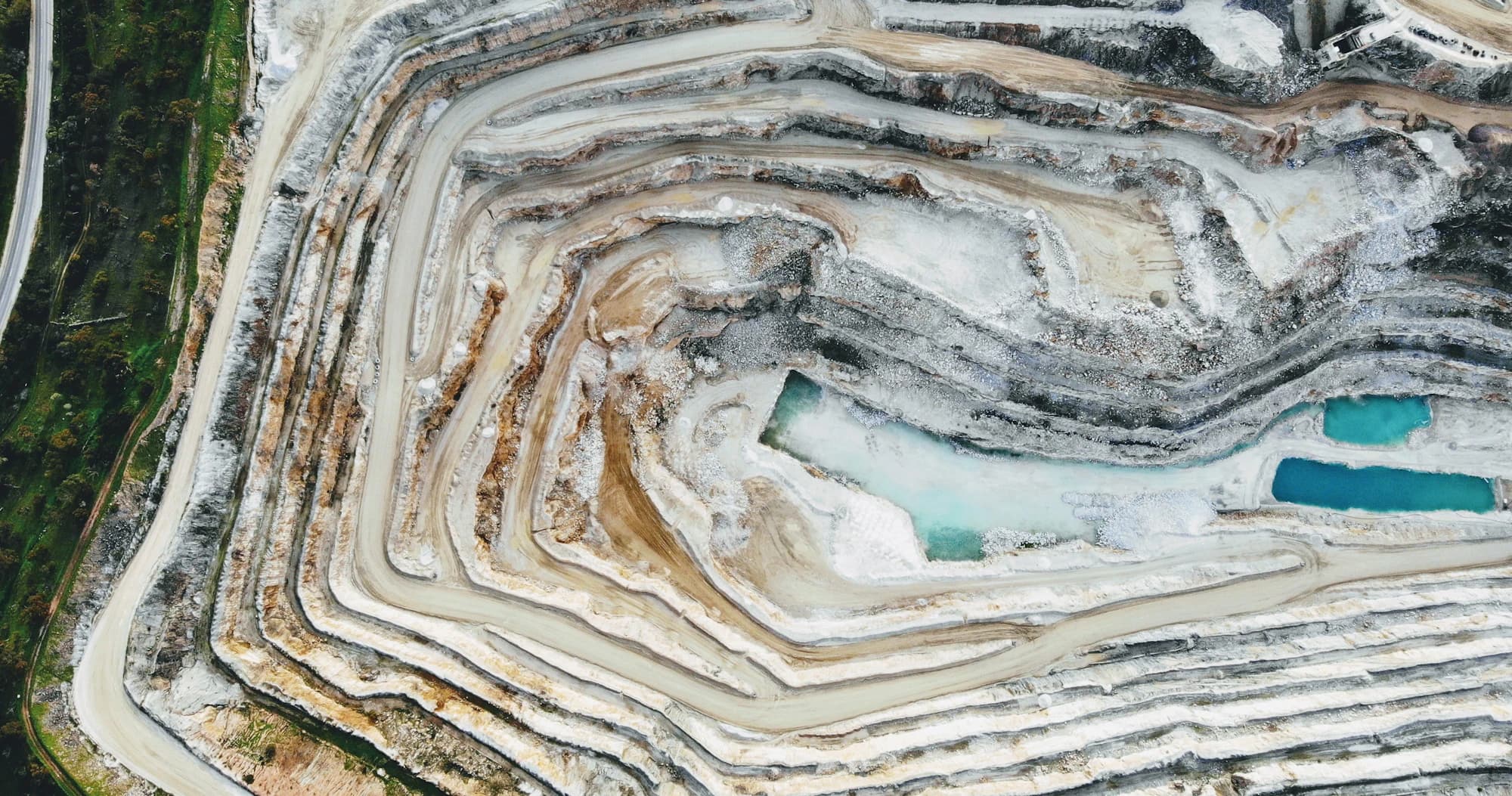
Aggregates & Quarry M&A
Thinking about selling your quarry or sand and gravel operation?
Permitted reserves close to growing markets are difficult to replicate, and buyers tend to value them that way. We help owners of quarries, sand and gravel pits, and aggregates operations understand what buyers pay for, and run a confidential sale when the time is right.
The aggregates market in brief
Aggregates are the crushed stone, sand, and gravel that go into concrete, asphalt, and road base. In 2025, U.S. producers sold an estimated 1.5 billion metric tons of crushed stone (about 72% of it used as construction aggregate) and 870 million metric tons of construction sand and gravel, from roughly 3,500 quarries and 6,500 pits. Volume was flatter than price: crushed stone was unchanged from 2024, and sand and gravel slipped from 880 million metric tons.[1],[2]
The business is local by nature. Stone is heavy and sells for a modest price per ton, so the cost of trucking it limits how far a quarry can profitably ship. A well-located operation often serves customers that more distant competitors cannot reach economically, which is why buyers study a quarry’s location and reserves as closely as its income statement. USGS expects zoning and land development to keep pushing new quarries away from large population centers.[1]
Production is spread across many companies. The same survey counts an estimated 1,400 companies producing crushed stone and 3,400 producing construction sand and gravel.[1],[2]
Buyers building a regional position often add operations one at a time, so an unsolicited call is not unusual.
What buyers pay for in an aggregates business
Earnings matter, but in this sector they are only part of the picture. Buyers generally underwrite the ground itself: how much material is left, whether it can legally be mined, and who it can reach.
Permitted reserves
Buyers start with how many years of permitted, minable reserves remain at current production, and how much of that is backed by drilling and lab testing rather than inferred. A reserve report from a qualified geologist turns the most important asset in the business from an assumption into a number a buyer can underwrite.
Permits and zoning
Mining, air, water, and land-use approvals are often harder to obtain than the equipment or the land. Permits that are current, transferable, and broad enough to allow expansion can weigh heavily in how a buyer values the operation.
Location and haul radius
Because trucking cost rises with every mile, the customers within an economical haul define the market. Proximity to growing metros, highway work, and ready-mix or asphalt plants can matter as much as the size of the deposit.
Product quality and specifications
Stone from a source on the state DOT’s approved list can be sold into public road work. Test history, gradation records, and approved-source status show a buyer what the material can be used for.
Downstream integration
An operation that also runs an asphalt plant, a ready-mix plant, or its own trucking captures more of each ton and has more control over its own demand. Buyers look at how much volume goes to captive or long-standing customers.
Land ownership
Owned land, or long leases with clear royalty terms and renewal rights, gives a buyer confidence the reserves stay accessible. A short lease on the best ground can limit value.
What gets discounted when you sell a quarry
The same features that make a quarry valuable carry long-lived obligations. Buyers price these in, through the number or through the deal structure.
Short reserve life
If permitted reserves run out within a few years and expansion is uncertain, a buyer is pricing a wind-down rather than a going concern.
Reclamation liabilities
Most states require disturbed ground to be reclaimed under an approved plan backed by a bond. Buyers estimate that cost, review the bond where one exists, and account for whatever is not already funded.
Safety and compliance history
MSHA inspection records, citations, and open orders get close review. A pattern of violations tends to become a price or structure issue.
Deferred equipment
Crushers, screens, loaders, and haul trucks run hard. Equipment kept running past its useful life shows up as capital spending in the buyer’s model.
Customer concentration
Heavy reliance on one contractor, one public program, or one plant customer leaves volume exposed if that relationship changes.
Permit and zoning risk
Pending renewals, neighbor disputes, or permits that do not cover planned expansion can delay closing, or shift risk to the seller through an escrow or an earnout.
Who buys quarries and aggregates operations
Each type of buyer values reserves, permits, and land differently. Reaching more than one is generally how an owner learns what the operation is worth.
Public construction materials producers
Large aggregates and materials companies expanding into new markets or adding reserves next to existing operations. They know the business well and often move efficiently through diligence.
Looks for: Reserves, permits, and fit with their existing plants and markets.
Private equity backed platforms
Investment firms building regional aggregates or construction materials businesses, often asking the founder or management to keep a stake.
Looks for: A team that stays, room to grow, and add-on potential nearby.
Contractors buying their own supply
Paving, ready-mix, and heavy civil companies acquiring a source of stone to control cost and availability for their own work.
Looks for: Material that meets their specifications within haul distance of their projects.
Family offices and long-term holders
Investors with long time horizons who may value land and reserves as much as current earnings.
Looks for: Owned land, long reserve life, and steady cash flow.
Quarry due diligence: what to prepare
These are the records buyers ask for first. Owners who assemble them before going to market generally move faster and face fewer late surprises.
Reserve study
A current geologic report with drilling data, tonnage by product, and years of life at current and planned production.
Permit file
Mining, air, stormwater, and water permits, zoning approvals, renewal dates, conditions, and what a change of ownership requires.
MSHA records
Inspection history, citations and how they were resolved, the Part 46 training plan and records, workplace examination records, and Part 50 injury reports.
Reclamation plan and bond
The approved plan, disturbed acreage, the current bond amount, and an estimate of the cost to complete it.
Land and royalties
Deeds, leases, royalty schedules, and mineral rights, including who owns what beneath the surface.
Production and pricing
Tons sold by product and customer, price history, and the scale-house records that support them.
Equipment
A fixed asset list with age, hours, maintenance logs, and a recent appraisal.
Environmental
A Phase I environmental site assessment, water and dust management records, and any past issues and how they were resolved.
Questions owners ask about selling a quarry
How much is my quarry worth?
Value generally depends on permitted reserves, location relative to customers, product quality, and the earnings the operation produces today. Two quarries with similar income can be valued very differently once a buyer measures the years of reserves left and how hard the permits would be to replace. A reserve study is usually the starting point for a credible estimate.
Who buys quarries and sand and gravel operations?
Buyers typically include publicly traded construction materials producers, private equity backed platforms, contractors buying their own supply of stone, and long-term investors such as family offices. Each values reserves, permits, and land differently, so a sale process that reaches more than one type of buyer generally shows what the operation is worth.
Do quarry permits transfer to a new owner?
It depends on the permit and the state. Some permits stay with the operating company when its ownership changes, while others require notice, approval, or a new application, especially in an asset sale. Reviewing every permit’s transfer conditions early helps keep them from delaying the closing, and MSHA expects an updated legal identity report within 30 days of a change in operator.
What is a reserve study, and do I need one before selling?
A reserve study is a geologist’s report on how much minable material remains, its quality, and how long it will last at expected production. Most buyers commission their own, but a recent study prepared before a sale lets an owner understand the main value driver and answer buyer questions with data instead of estimates.
Should I sell the land with the quarry?
Owners can sell the land with the business, keep it and lease it to the buyer in exchange for a royalty, or split the two. Each choice changes the price, the tax result, and the income the owner keeps after closing, so it is worth deciding with tax and legal advisors before going to market.
How long does it take to sell an aggregates business?
A prepared sale process commonly runs several months from launch to closing. Reserve verification, permit review, and environmental diligence tend to take the longest, so owners who organize those records in advance generally move faster and face fewer surprises late in the process.
Related reading
- Paving & Asphalt M&A
Asphalt plants and the paving contractors who buy aggregates.
- Construction M&A
Heavy civil and construction services businesses.
- How to sell a paving company
The sale process for a neighboring trade, start to finish.
- What a quality of earnings report tests
The financial diligence nearly every buyer commissions.
Sources
- [1] U.S. Geological Survey, Mineral Commodity Summaries 2026: Stone (Crushed), 2026 (ver. 1.3, May 2026). View source
- [2] U.S. Geological Survey, Mineral Commodity Summaries 2026: Sand and Gravel (Construction), 2026 (ver. 1.3, May 2026). View source