Boutique investment bank
Investment Banking Services for Business Owners
Sell-side M&A, capital raising, ESOP advisory, and exit planning for owners of private companies.

What an investment bank does for a private company
An investment bank advises on transactions: selling a company, raising debt or equity, bringing in a partner, or reworking how the company is financed. For a private, owner-run company, that usually means one owner making the largest financial decision of their career, with buyers and lenders on the other side who do this every week.
A boutique investment bank is a small firm that does this work for a narrower set of clients. For us that means owners of founder-owned and family-owned companies, many of them in industrial and blue-collar fields, with senior bankers on every engagement from the first call to closing.
Investment banking services are offered through First Turn Securities, a registered broker-dealer and member of FINRA and SIPC. That registration puts our securities business under federal securities rules and FINRA oversight.
Our services
Four services cover most of what owners ask us for. Each has its own page.

Sell-side M&A advisory
Selling all or part of a company through a confidential process with qualified strategic and financial buyers.

Capital raising
Senior debt, mezzanine financing, minority equity, and recapitalizations for owners who want capital without selling outright.
ESOP advisory
Feasibility, selling to an employee stock ownership plan, and selling or ending an ESOP-owned company.

Succession and exit planning
A readiness review and a plan, years before a sale, and advice to boards and shareholder groups weighing their options.
IPO readiness and advisory
Going public is a long project, and most of the work happens before the offering is ever marketed.
Readiness assessment
Where the company stands against what public investors and regulators expect: audited financials, reporting speed, internal controls, governance, and the board.
Closing the gaps
A plan and a schedule for the work, from audit and reporting upgrades to independent directors and the finance team a public company needs.
Choosing the banks that lead the offering
We help the company choose the investment banks that will market and sell the shares, and we sit on the company's side of those negotiations.
Advice through the offering
We stay on as the company's advisor through filing, marketing, and pricing, and help the board weigh the alternatives, including a private sale or a private raise.
Market value analysis
A market value analysis is our view of what a business would bring in today's market, and why.
When owners ask for one
Deciding whether to sell now or later, buying out a partner, settling a shareholder disagreement, a board decision, or testing an offer that arrived without a process behind it.
How we build it
We recast earnings, then look at the business three ways: what similar companies have sold for, what its future cash flow is worth, and what its assets are worth. Each method answers a different question.
What you get
A range, the reasoning behind it, and the factors that would move it up or down, written so you can use it in a decision rather than file it away.
What it is not
It is not an appraisal for tax filings or for an ESOP trustee. Those call for an independent appraiser, and we can tell you when you need one.
Capital restructuring
Sometimes the company is fine and the balance sheet is not: too much debt, the wrong kind, or terms that no longer fit how the business earns.
Refinancing
Replacing debt with terms that match the company's cash flow and seasonality, run as a competitive process among lenders.
Reworking lender terms
Preparing the company's case and negotiating covenant changes, extensions, or a new repayment schedule with existing lenders.
A recapitalization
Bringing in equity or junior capital to reduce debt, buy out a partner, or fund a plan the current structure cannot carry.
Selling a division
Selling a business line or assets that no longer fit, so the rest of the company can carry its obligations and grow.
How an engagement starts
Every engagement starts with a conversation, and some end there with a straight answer about what fits.
A confidential conversation
Your goals, your timeline, and the company, kept between us.
A look at the business
We review the financials and the market for your industry and share an initial view.
A recommendation
Which service fits, or whether the right answer is to wait and prepare.
An engagement
If we are a good fit, a written engagement letter sets out the scope, the team, and the timeline.
Who we work with
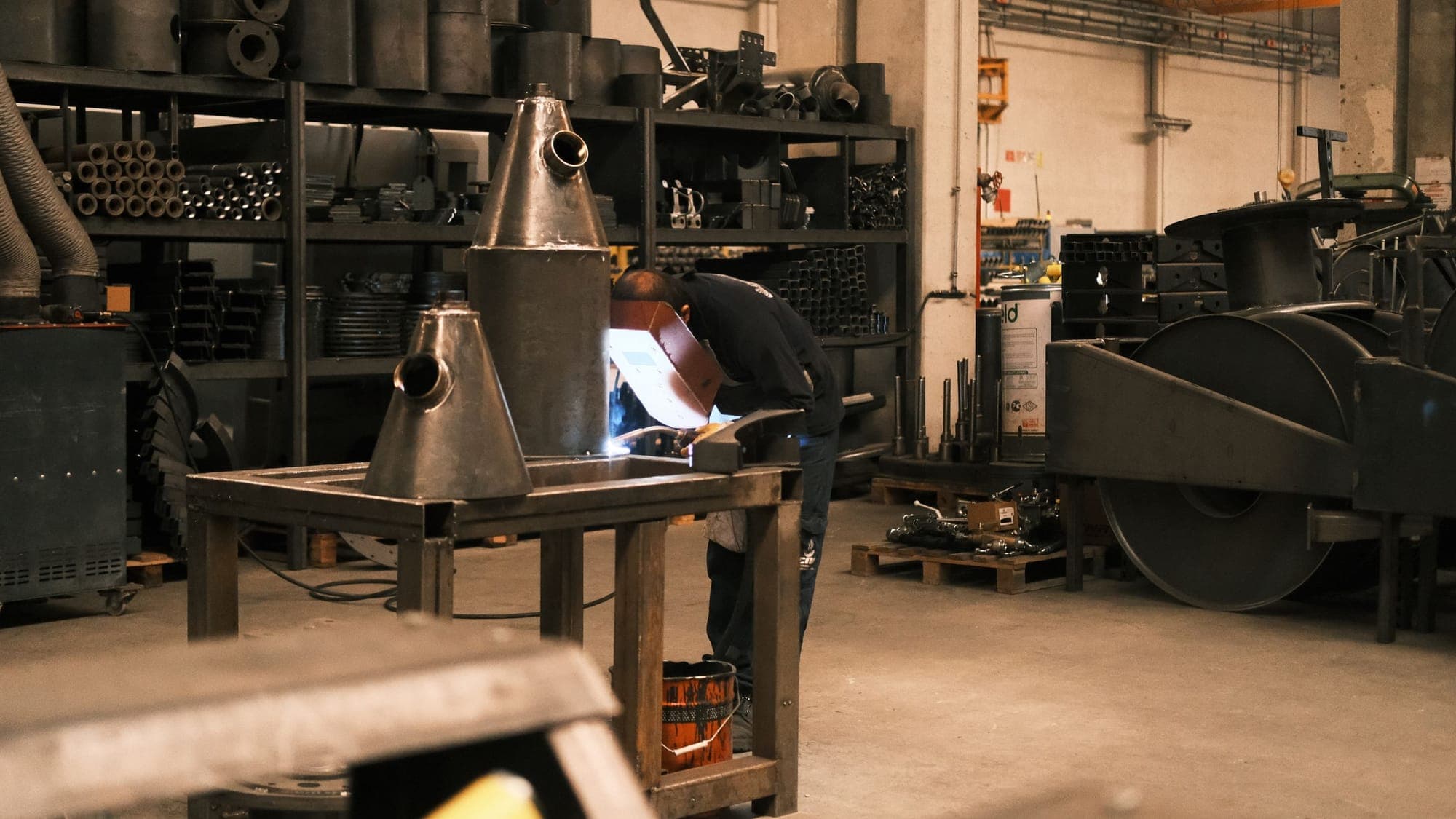
Owners of established private companies, most of them founder-owned or family-owned, that have outgrown a business broker. Many are in industrial and blue-collar fields: aggregates, construction, paving, steel, oilfield services, manufacturing, and the trades.
We work with owners anywhere in the United States. The first question is less about size than about what the owner wants next, and whether a transaction is the right way to get there.
Industries we serve
Each industry page covers what buyers and lenders look for in that field.

Aggregates & Quarries
Sell-side M&A advisory for owners of crushed stone quarries, sand and gravel pits, and construction aggregates operations.
Aggregates & Quarries M&A
Steel Fabrication & Erection
Sell-side M&A advisory for owners of structural steel fabricators, miscellaneous metals shops, steel erectors, and bridge fabricators.
Steel Fabrication & Erection M&A
Paving & Asphalt
Sell-side M&A advisory for owners of asphalt paving contractors, hot mix asphalt plants, and highway and street construction companies.
Paving & Asphalt M&A
Construction
Sell-side M&A advisory for owners of general contracting, heavy civil, and specialty trade contracting companies.
Construction M&A
Oilfield Services
Sell-side M&A advisory for owners of oilfield services and energy services companies, including well services, water, rental tools, and production services.
Oilfield Services M&A
Manufacturing
Sell-side M&A advisory for owners of manufacturing companies, including machine shops, metal fabrication, machinery, and other industrial producers.
Manufacturing M&A
Reading on investment banking
- What an investment banker does when you sell
The work behind a sale, step by step.
- Business broker or investment bank
How the two differ and which one fits.
- Investment banking for mid-market businesses
What a smaller investment bank does differently.
- How to choose an investment bank
Questions to ask and what to check.
- What capital restructuring is
When a company should consider it.
- How valuation methods differ
Why the method matters for a seller.
Questions owners ask about investment banking
What does an investment bank do for a private company?
It advises the owner on a transaction and runs it: selling the company, raising debt or equity, bringing in a partner, or restructuring how the company is financed. The bank prepares the materials, finds and approaches buyers or investors, runs a competitive process, negotiates terms, and manages diligence through closing, while the owner keeps running the business.
Business broker or investment bank: what is the difference?
Business brokers usually sell smaller companies, often by listing them for a broad audience of individual buyers. An investment bank works with larger, established companies, approaches strategic and financial buyers directly and confidentially, and is registered as a broker-dealer because many deals involve securities. Which one fits depends on the company's size, complexity, and likely buyers.
What is a boutique investment bank?
A boutique is a smaller investment bank that focuses on a narrower set of clients or services rather than offering everything a large bank does. For an owner, the practical difference is usually who does the work: at a boutique, the senior bankers you meet tend to be the ones who run your transaction from start to finish.
Is First Turn a registered broker-dealer?
Investment banking services are offered through First Turn Securities, a registered broker-dealer and member of FINRA and SIPC. First Turn Capital and First Turn Securities are separate, affiliated entities. You can check the firm's registration, history, and any disclosures on FINRA BrokerCheck.
Do you help companies go public?
Yes, as the company's advisor. We assess readiness, help close the gaps in reporting, controls, and governance, help the company choose the investment banks that will lead and sell the offering, and advise the board through the process. We also help owners compare an IPO with a private sale or a private raise.
What is a market value analysis?
It is our view of what a business would bring in today's market, with the reasoning behind it. We recast earnings and look at the company through comparable sales, future cash flow, and assets. Owners use it to decide whether and when to sell, to buy out a partner, or to test an offer. It is not an appraisal for tax filings.
How does an engagement start?
With a confidential conversation about your goals, your timeline, and the company. We review the financials and the market for your industry, share an initial view, and recommend which service fits, or whether to wait and prepare. If we are a good fit, a written engagement letter sets out the scope, the team, and the timeline.