Manufacturing
- Where the owner started
- Listed with a business broker for 18 months with no offers.
- What we did
- We ran a full marketing process, and the sale closed in eight months.
Why First Turn
Not all advisors are equal. Here's how to evaluate your options.
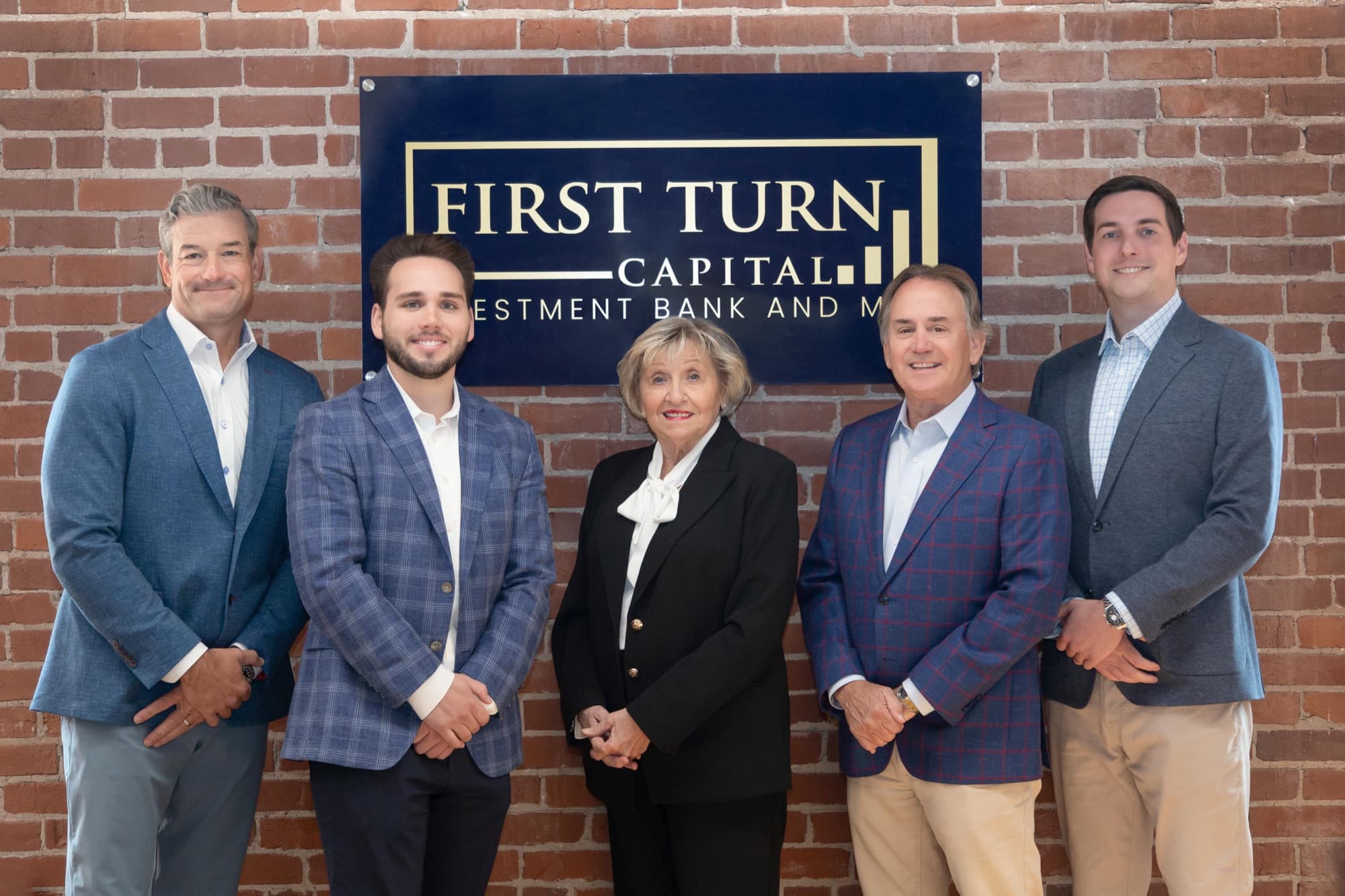
Understanding the differences between advisor types helps you make an informed decision about who should represent your interests.
| Criteria | Investment Bank(First Turn Capital) | Business Broker | No Advisor | CPA Firm |
|---|---|---|---|---|
| Regulatory Oversight | First Turn Securities, Member FINRA/SIPC | Varies by state | None | State board of accountancy |
| Buyer Network | National and regional buyer relationships | Local and regional | Your personal contacts | Client and referral contacts |
| Valuation Expertise | Detailed valuation analysis | Pricing guides and comparable listings | Your own estimate | Tax-focused |
| Negotiation Support | Negotiates price, structure, and terms | Varies by firm | You negotiate directly | Not their focus |
| Confidentiality | Structured NDA process | Varies | Your own NDAs | Professional confidentiality rules |
| Due Diligence Support | Manages the full process | Varies by firm | You manage it | Financial only |
| Typical Fit | Established lower middle market companies | Smaller, simpler Main Street businesses | A sale to a buyer you already know | Tax and accounting work alongside an advisor |
We bring an investment bank's full sale process with the personal attention of a boutique firm.
Securities transactions are conducted through First Turn Securities, a FINRA/SIPC-registered broker-dealer. This means your transaction is handled by a firm that operates under federal securities regulations and disclosure requirements.
We specialize in lower middle market transactions, the sweet spot where companies are substantial enough to attract serious buyers but often overlooked by Wall Street firms.
Deep experience in energy services, construction, aggregates, paving, manufacturing, and other sectors that drive the Southwest economy. We understand your industry's nuances.
Headquartered in Oklahoma City with an office in Dallas and deep roots in Texas and the Southwest, but connected to buyers and capital sources nationwide.
Access to private equity firms, strategic acquirers, family offices, and independent sponsors actively seeking acquisitions in your industry.
A growing company can change hands several times. Each sale is a turn, and each buyer is usually bigger than the last.
First Turn
Usually for the first time, often to a private equity firm, and often keeping a stake in the company. This is the sale we represent.
Second Turn
Often three to five years later, sometimes longer, to a larger fund or strategic buyer. A seller who kept a stake sells it here: the second bite of the apple.
Third Turn
The next owner grows the company again and sells it to someone larger still. There's always a bigger fish.
Every turn after the first is a sale between professionals. The first turn is the one where the seller has usually never done this before, and the terms set there follow the owner's stake into every sale after it.
How the math works at each turnAnonymized examples of where owners started and what we did.
These anonymized case studies are for illustrative purposes only. Past performance is not indicative of future results. Each transaction is unique, and outcomes depend on market conditions, business characteristics, and other factors.
Common questions about choosing the right M&A advisor.
First Turn Securities, our FINRA/SIPC-registered broker dealer, operates under FINRA oversight and federal securities regulation. We provide full services including valuation, buyer identification, negotiation, and deal structuring. Business brokers typically handle smaller, simpler transactions; licensing requirements vary by state, and brokers often price a business from comparable listings. The right choice depends on the size and complexity of your business.
You can sell directly. An advisor brings competitive tension by engaging multiple buyers, protects confidentiality, handles complex negotiations, and lets you focus on running your business. Most importantly, buyers know an unrepresented seller is at a disadvantage, and they negotiate accordingly.
FINRA (Financial Industry Regulatory Authority) registration means your advisor operates under federal securities laws with established disclosure requirements and regulatory oversight. First Turn Securities, our registered broker-dealer, is subject to these standards. You can verify our registration and review our record on FINRA's BrokerCheck.
Our fees depend on the engagement, and we walk through them in the first conversation.
We focus on established middle-market companies, though we've handled transactions of varying sizes for the right situations. If you're not sure whether you're a fit, schedule a consultation and we'll give you an honest assessment.
Schedule a confidential, no-obligation consultation to discuss your situation and goals.